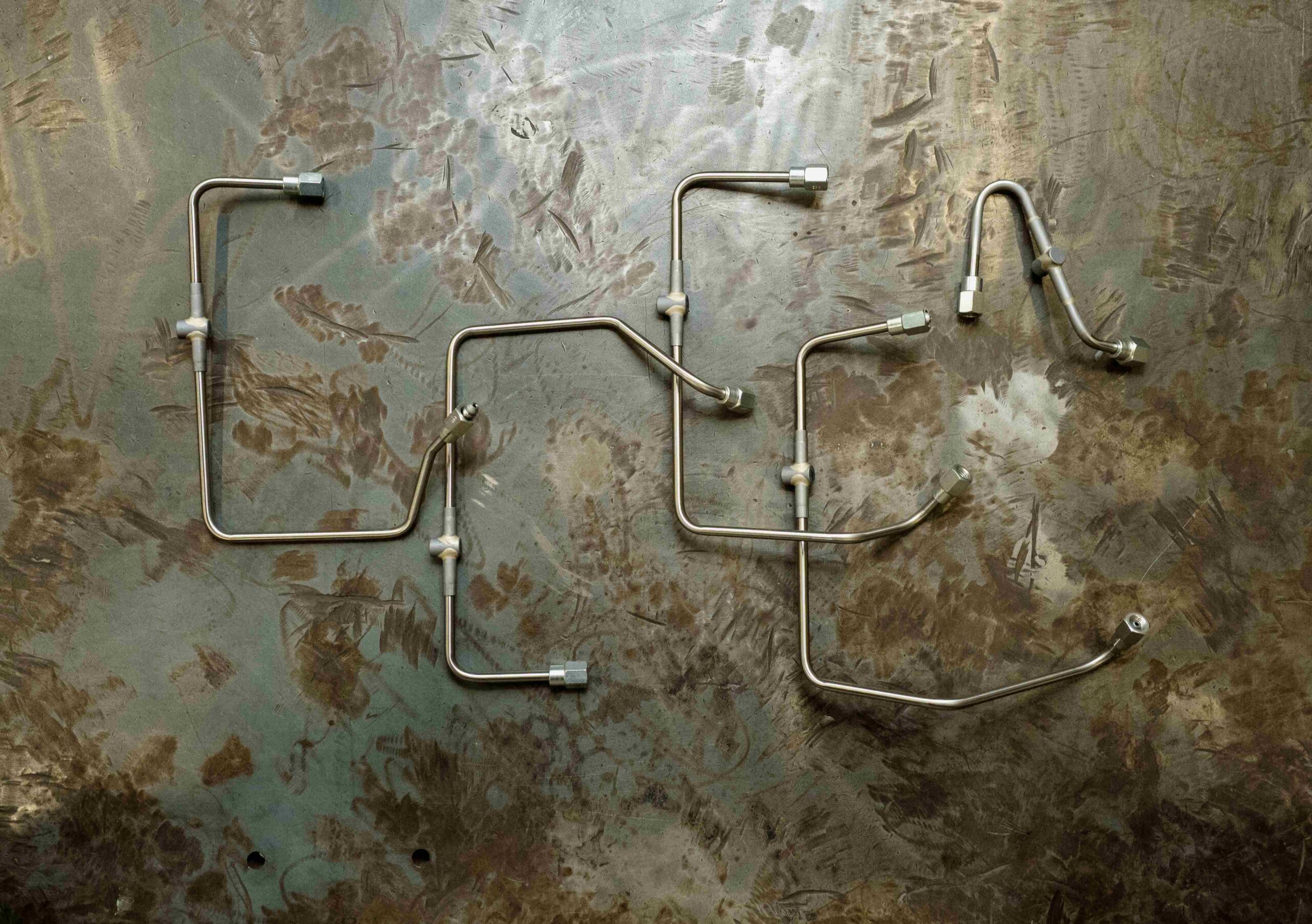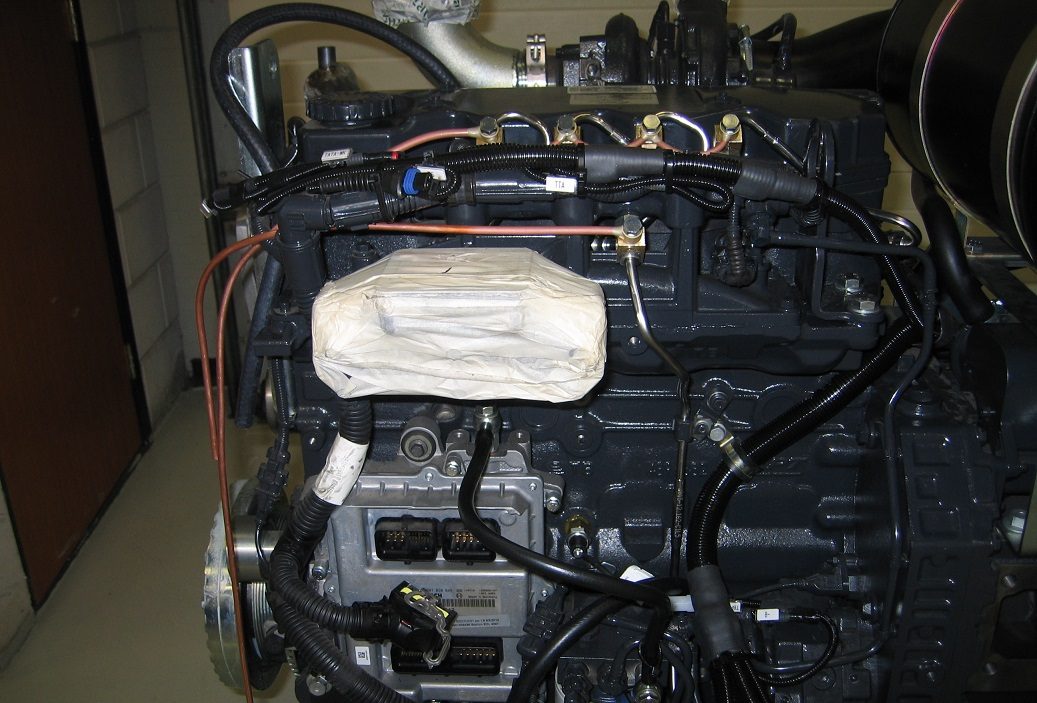
Double-walled fuel lines consist of a pressure-bearing inner line surrounded by an outer jacket. The inner line transports fuel under high pressure to the engine’s fuel injection system. The outer jacket is designed to contain fuel in the event of a leak in the inner line and to drain it through a designated outlet.
This design is used in applications such as marine engines, where leaking fuel can come into contact with hot engine components. The protection functions as part of a complete system that also includes connections, fuel leak drainage, and an alarm system.
How does a double-walled fuel line work?
During normal operation, fuel flows through the inner tube. This tube and its associated connections are designed to withstand the pressure and other loads of the respective fuel injection system. The outer jacket surrounds the inner tube and serves a protective function.
If the inner pipe becomes damaged, fuel can leak into the space between the inner pipe and the outer jacket. The system must collect this leaked fuel and drain it into a designated collection facility. Leaked fuel detection can then trigger an alarm, ensuring that the malfunction is detected.
Each component has its own function:
Component
Indoor Pipe
Outer jacket
Leakage Fuel Drain
Fuel Leak Detection
Position
Transport the fuel under high pressure.
Collects fuel that leaks from the internal line.
Transports collected fuel to the designated facility.
Detects leaks and enables an alarm to be triggered.
Why are fuel lines designed with double walls?
In an engine room, fuel lines are often located near warm or hot components. If a high-pressure line fails, fuel can be released as a jet or mist. If this fuel comes into contact with an ignition source, a fire can break out.
A double-walled design helps mitigate this risk by containing any fuel that is released within a protective jacket. The fuel is then discharged via a controlled route.
A double-walled fuel line does not prevent the inner line from leaking. The design is intended to mitigate the consequences of such a leak. This distinction is important: even a double-walled system remains dependent on being in good technical condition, proper installation, and functioning fuel-leak containment systems.
This protection is particularly relevant for maritime applications, such as propulsion engines and auxiliary engines on board ships.
What is the difference between this and a single-wall fuel line?
A single-wall fuel line has a single pressure-bearing wall. In a double-wall design, a separate outer jacket is fitted around it to contain any fuel that may leak.
The outer jacket does not automatically make the inner pipe suitable for a higher operating pressure. The inner pipe’s pressure resistance is determined by its design, material, dimensions, and connections. The secondary wall primarily serves to control leakage.
Furthermore, single-wall and double-wall pipes are not necessarily interchangeable. When using a double-wall design, the installation must take into account the outer jacket, the connections, and the drainage of leaked fuel.
Donker produces single- and double-walled fuel lines based on the technical requirements of the engine and the installation.
Which components determine how the system works?
A double-walled pipe, together with its connections and fuel leak containment systems, forms a single protective system. Therefore, simply installing a jacket around the pipe is insufficient.
Connections and Transitions
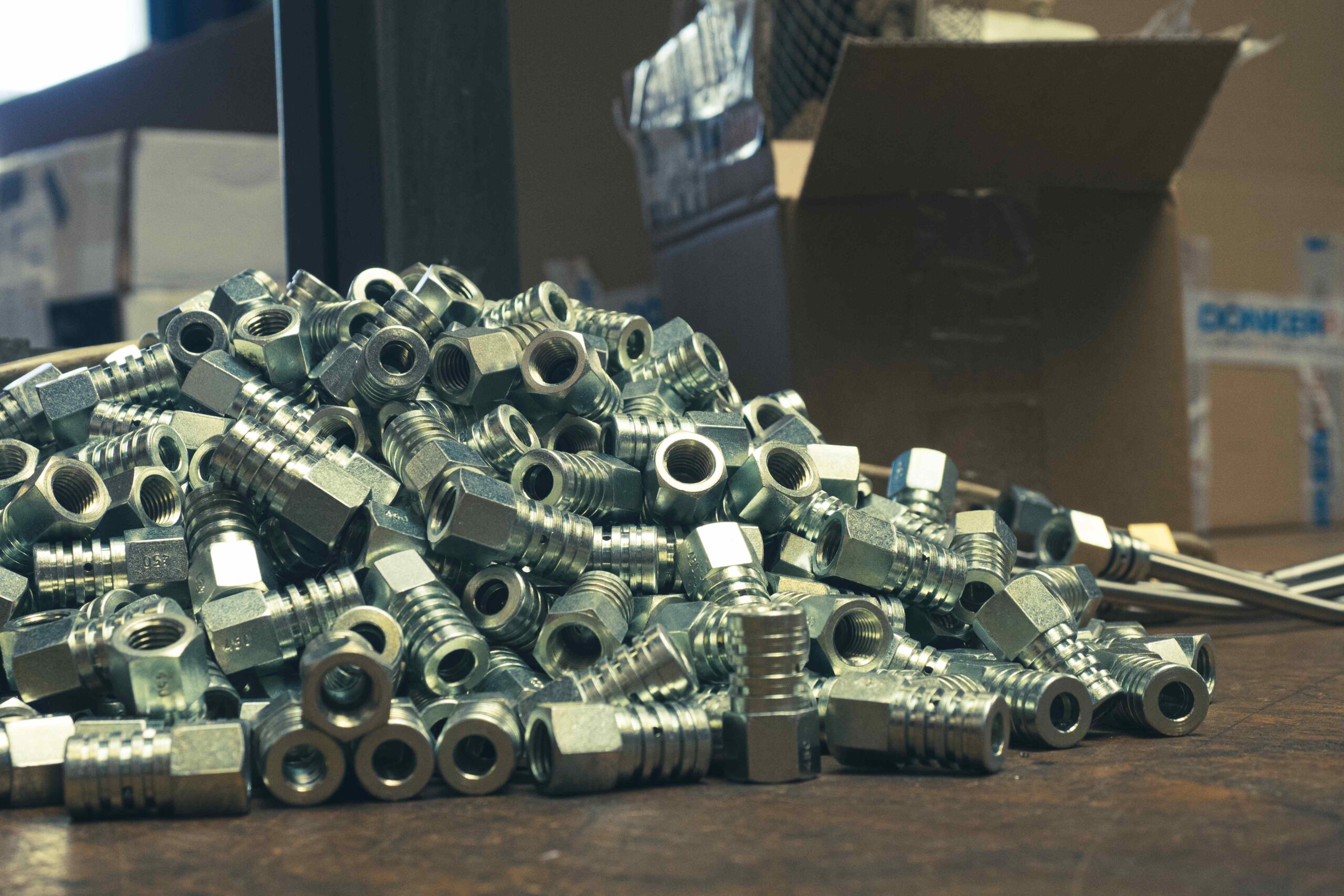
The protective covering must be compatible with the design of the connection points on the pump and injector. It is precisely at these junctions that it must be clear how any leaks will be contained and drained.
A matching thread alone is not sufficient to determine whether a replacement part is suitable. The seal, geometry, and connection to the outer casing must also match the required design.
Space between the inner conductor and the outer jacket
The space between the two walls allows leaked fuel to drain away. This space and the drainage systems must be designed so that, in the event of a leak, no undesirable pressure buildup occurs that could damage the outer casing.
The outer jacket is therefore not a secondary fuel line that takes over normal operation in the event of a failure. A leak requires assessment and follow-up in accordance with the procedures for the installation.
Fuel Leak Drainage and Alarm System
The collected fuel must be able to reach the designated collection system. A blocked or improperly connected drain can interfere with the operation of the protection system.
Where fuel leak detection is installed or required, this system must also be operational. After maintenance, it is therefore important that any disconnected connections are properly reconnected and that the system is inspected in accordance with applicable regulations.
Passing and Support
Double-walled fuel lines are also subjected to vibrations and temperature changes during engine operation. The line must therefore fit properly and be supported at the specified points.
Misalignment should not be corrected by using clamps or by forcing the parts together. When replacing parts, the inner conduit, the outer jacket, and the corresponding connections must all be compatible with the installation.
Advice on Selecting a Suitable Double-Wall Fuel Line
Do you need a replacement pipe, or is the original part no longer available? Donker will evaluate the options based on engine specifications, technical drawings, or an existing pipe.
Request technical advice
What role do maritime safety regulations play?
Maritime regulations include requirements for protecting external high-pressure fuel lines against the effects of leaks. This involves more than just the line itself: containment and detection systems may also be part of the required design.
Exactly which regulations apply depends on the vessel, the engine system, and the applicable regulatory and inspection framework. For a specific application, therefore, the relevant regulations, manufacturer specifications, and any requirements of the classification society must be verified.
When replacing a pipe, it is important to determine in advance what technical documentation, inspections, and approvals are required. This ensures that these requirements are taken into account during production and delivery.
When should a double-walled fuel line be replaced?
A leak in the inner pipe is a clear indication that a technical assessment is needed. In addition, damage to the outer casing, corrosion, wear at attachment points, or problems with connections may warrant an inspection and possible replacement.
In this regard, the entire system must be taken into account. A new pipe will not automatically solve a problem such as a missing support or a blocked fuel leak drain.
Whether a repair is possible or a replacement is necessary depends on the extent of the damage, the pipeline design, and the applicable requirements. Donker provides support in the assessment and repair or replacement of fuel lines.
Can double-walled fuel lines be custom-made?
A replacement hose may be needed for an older motor, a modified system, or a part that is no longer available from the original supplier. In such situations, custom manufacturing can offer a solution.
It is not only the external dimensions that matter. The internal piping, connections, outer casing, and fuel leak drain must also be coordinated with each other and with the engine system.
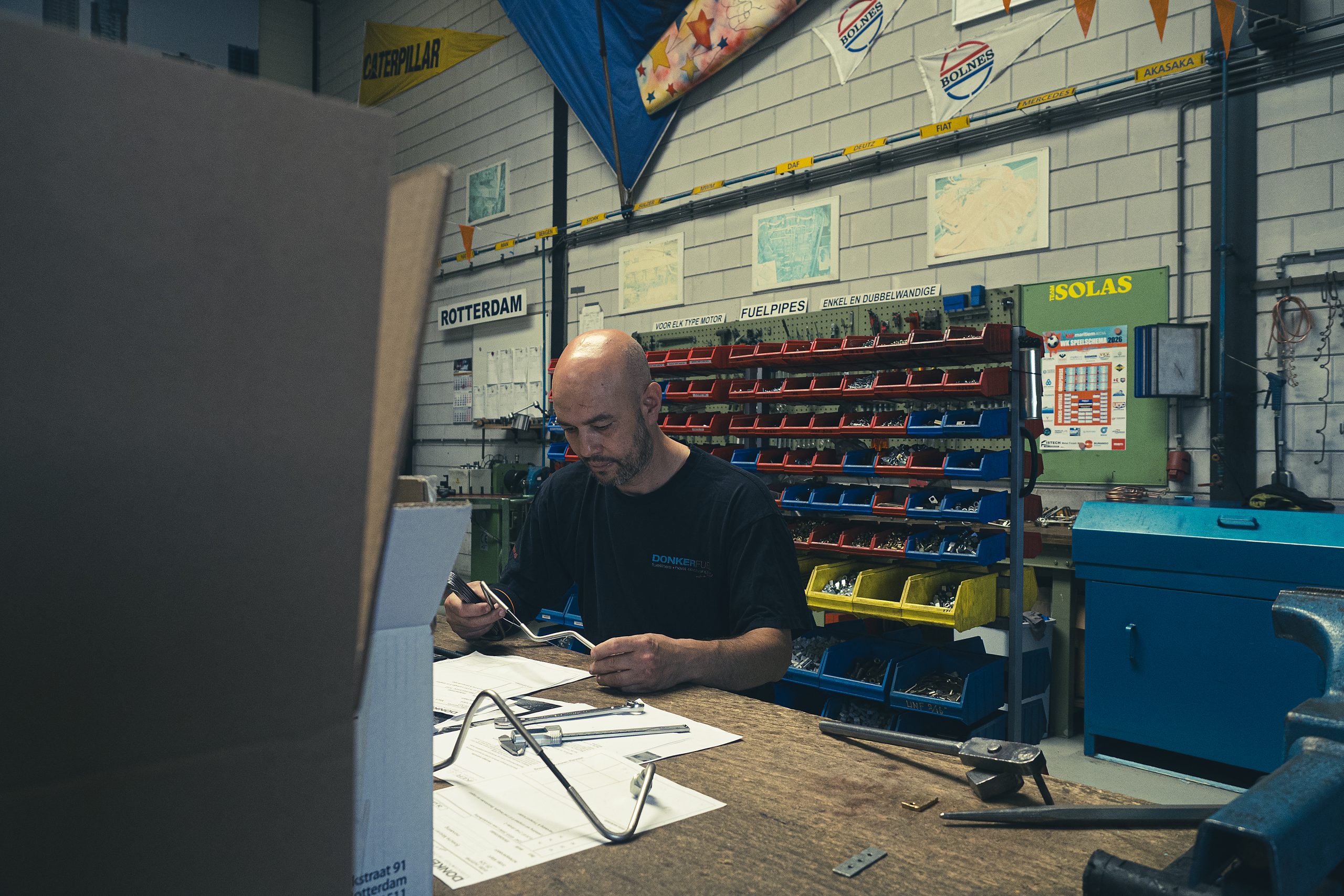
Donker manufactures Custom Fuel Lines based on, among other things, technical drawings, engine specifications, and existing examples. An existing pipe can provide information about its design, but any deformation or damage must be taken into account when determining the correct dimensions.
The following information is particularly useful for a targeted assessment:
- Motorcycle make, model, and, if applicable, serial number.
- Part number and location of the pipe.
- Available drawings or technical specifications.
- Photos of the piping, connections, and the installed system.
- Data on fuel leakage discharge.
- Required inspections, certificates, or approvals.
Double-walled fuel lines from Donker
Donker combines in-house manufacturing with technical expertise in fuel line systems for the maritime and industrial sectors. We provide support for replacement, reproduction, and custom work, tailoring our solutions to the specific engine installation.
Do you have a question about a double-walled fuel line, or would you like to discuss your options for replacement? Please contact Donker. With the available motor specifications and information about the existing piping, we can work with you to develop a tailored solution.